🌟 Introduction
Thermal insulation plays a vital role in modern construction and industrial systems by controlling heat transfer, improving energy efficiency, and enhancing system performance. From HVAC systems to industrial pipelines and commercial buildings, thermal insulation ensures temperature stability, cost savings, and long-term durability.
At Prithvi Corporation, we provide advanced thermal insulation solutions tailored to a wide range of applications, delivering reliable performance across industrial, commercial, and residential sectors.
🏭 Where Thermal Insulation is Used
Thermal insulation is widely applied across multiple industries and systems:
🔹 HVAC Systems
Thermal insulation is essential in HVAC (Heating, Ventilation, and Air Conditioning) systems to maintain temperature control and prevent energy loss. Insulating ducts and chilled water pipelines helps improve system efficiency and reduces operational costs.
🔹 Industrial Pipelines
Industries rely heavily on insulated pipelines to maintain fluid temperatures. Whether it’s hot water, steam, or chilled fluids, thermal insulation minimizes heat loss and ensures smooth operations.
🔹 Commercial Buildings
In commercial spaces like malls, offices, and hospitals, insulation helps regulate indoor temperatures, reducing dependency on air conditioning systems and lowering energy bills.
🔹 Cold Storage & Refrigeration
Thermal insulation is critical in cold storage facilities to maintain low temperatures and prevent heat gain, ensuring product safety and energy efficiency.
🔹 Boilers & High-Temperature Equipment
High-temperature equipment such as boilers, furnaces, and tanks require insulation to retain heat, improve efficiency, and ensure safety.
🧩 Types of Thermal Insulation Materials
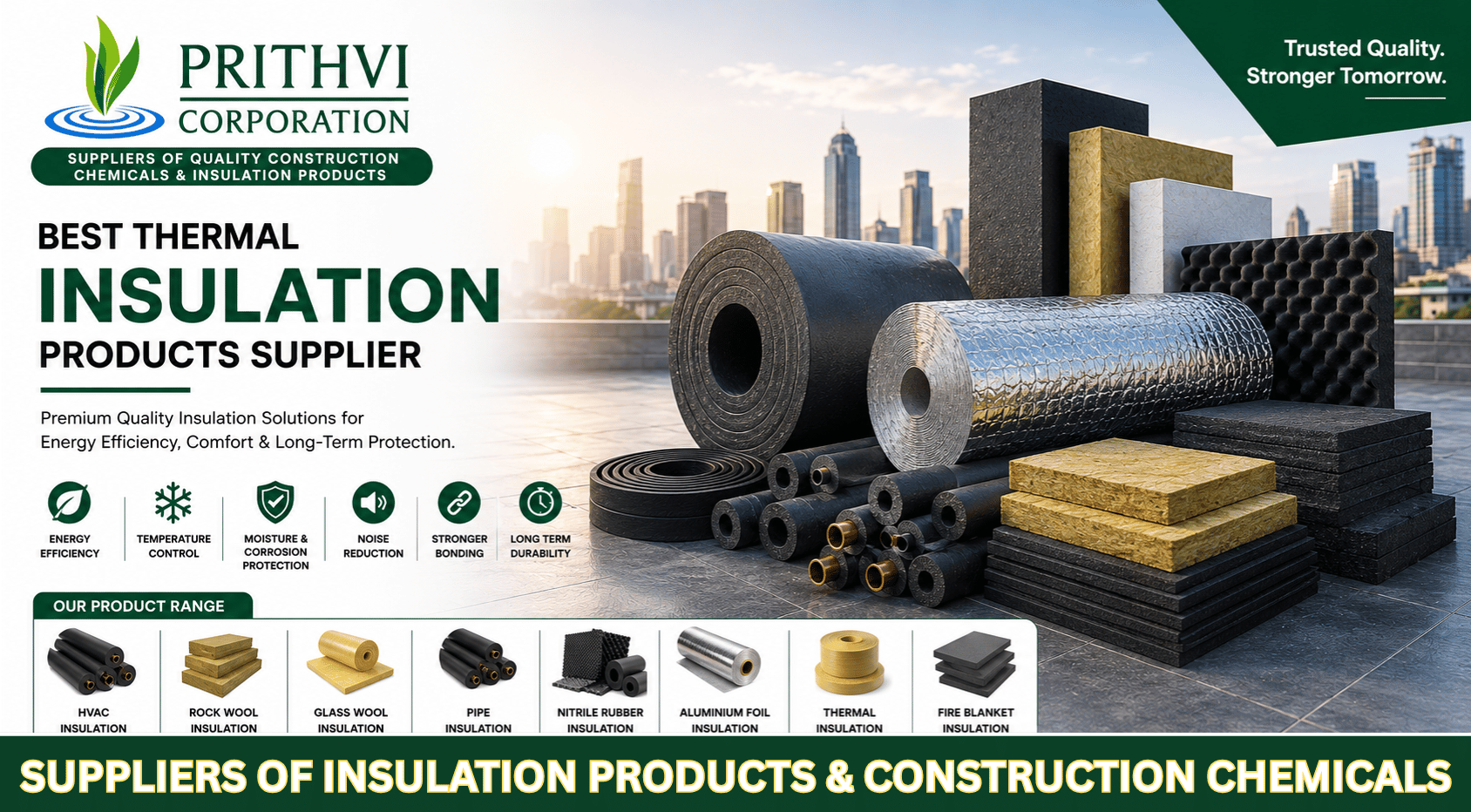
Different applications require different insulation materials. At Prithvi Corporation, we use:
- 🔹 Nitrile Rubber Insulation – Ideal for HVAC pipes and ducts
- 🔹 Glass Wool Insulation – Used for duct insulation and thermal control
- 🔹 Rock Wool Insulation – Suitable for high-temperature applications
- 🔹 PUF (Polyurethane Foam) – Used for cold storage and refrigeration
- 🔹 Aluminum Cladding – Provides external protection and durability
⚙️ Thermal Insulation Application Process
A proper insulation process ensures maximum efficiency and long-lasting results. Here’s how it is done:
🔹 1. Site Inspection & Analysis
The first step involves a detailed inspection of the site. Our experts analyze:
- Temperature requirements
- Environmental conditions
- Type of system (HVAC, pipeline, equipment)
- Heat loss or gain areas
This helps in selecting the most suitable insulation solution.
🔹 2. Material Selection
Based on the analysis, appropriate insulation materials are selected. Factors considered include:
- Operating temperature
- Moisture exposure
- Durability requirements
- Energy efficiency goals
Choosing the right material ensures optimal performance and cost-effectiveness.
🔹 3. Surface Preparation
Before installation, the surface must be properly prepared:
- Cleaning dust, oil, or moisture
- Ensuring smooth and dry surfaces
- Repairing any damage or irregularities
Proper preparation improves bonding and insulation efficiency.
🔹 4. Insulation Installation
✔️ Pipe Insulation
- Insulation material is cut to size
- Wrapped around pipes
- Joints are sealed properly to prevent leakage
✔️ Duct Insulation
- Insulation sheets are applied over ducts
- Fixed using adhesives or mechanical fasteners
- Covered with protective layers if required
✔️ Equipment Insulation
- Applied over tanks, boilers, and machinery
- Ensures heat retention and safety
🔹 5. Sealing & Vapor Barrier
Proper sealing is crucial to avoid energy loss:
- Joints are sealed using adhesive tapes or sealants
- Vapor barriers are applied to prevent condensation
- Ensures moisture resistance and durability
🔹 6. Cladding & Protection
External protection is provided using:
- Aluminum cladding
- GI sheets or protective coatings
This step enhances durability and protects insulation from environmental damage.
🔹 7. Quality Check & Testing
After installation, a thorough inspection is carried out:
- Checking for gaps or leaks
- Ensuring proper sealing
- Testing thermal performance
This guarantees that the system meets required standards.
🚀 Benefits of Thermal Insulation
Thermal insulation offers multiple advantages:
- ✔️ Reduces energy consumption
- ✔️ Improves system efficiency
- ✔️ Maintains temperature consistency
- ✔️ Prevents condensation and moisture damage
- ✔️ Enhances safety and equipment life
- ✔️ Lowers operational and maintenance costs
🏢 Applications Across Industries
Thermal insulation is widely used in:
- Industrial plants
- HVAC systems
- Power plants
- Chemical industries
- Commercial buildings
- Cold storage facilities
- Pharmaceutical units
💡 Why Choose Prithvi Corporation?
Prithvi Corporation is a trusted name in thermal insulation solutions, offering:
- ✔️ High-quality insulation materials
- ✔️ Expert installation services
- ✔️ Customized solutions for every project
- ✔️ Strong inventory and fast delivery
- ✔️ Experience in HVAC and industrial sectors
🔍 Conclusion
Thermal insulation is essential for improving energy efficiency, maintaining temperature control, and ensuring long-term performance in various applications. With the right materials and professional installation, it significantly enhances system reliability and reduces operational costs.
Prithvi Corporation delivers advanced thermal insulation solutions designed to meet modern industry demands with precision and quality.